Coming this October from Open Court Press.

***
See it at Amazon.com
Fiction, essays, travel writing and more.
posted on RomanInUkriane and on NH Novella:
I.
Yogurt. Juice. Mandarins. A bicycle chain repair machine. Coffee creamer. Goods tightly bound in plastic bags, or placed individually in the overhead compartment.
Constant, frantic noise of middle-aged women, like walking into a chicken coop. rows full of boxes. seats piled high. windows blocked. boxes and bags.
The business of clearing seats, of ladies reminding each other what belongs to whom.
Diapers.
The doors close. The driver climbs over some bags to find his seat. A woman calls for the man sitting in front. He pulls a roll of packing tape from his coat pocket, steps over bags. he seals a torn-open box, returns to his seat, resigned to the duty of his labor, completely silent, unlike the women. A woman hands him a bag of vacuum sealed sausages. Some tumble to the floor. He kneels to retrieve them from under a seat. He will hold them in his lap for the rest of the trip. Another bag of sausages goes to the lady across the aisle from him.
The driver insisting the under compartment is full, unpacking a bag of thermoses — each is boxed, ready to be shelved in some store — and placing them individually in the overhead.
Boxes of powdered milk under the seats.
Slowly, things settle to private conversations. There are big snowy fields and villages in the distant forested hills.
What a vulgar, vile idea it was to reduce all this to the brutality and ignorance of a post office.
II.
I see the traffic before I see the border. Three lanes of vans and cars. All still. People stand among in their coats. So many. Later, I’m told they will mostly be crossing on foot.
I’m happy to see the bus steer into the lane for opposing traffic. We skip almost the entire line, then the driver stops and cuts the engine. We wait. There’s a 100 zloty note prominent on the dashboard.
One of the women speaks to the driver. 150 zloty. A quiet conversation. Another 40 zloty. I am a bystander to this world. (my ticket cost only 25.) A shuffling of documents.
We wait beside a flatbed trailer with two cars chained in place. I think they have no tires, but then see the tires laid flat. The frames rest upon the tires. Perhaps these aren’t cars at all. Perhaps in this moment they are merely scrap metal. A different thing entirely.
I watch my travel companions. Fascinated by their world. They know this trip well. I imagine their lives, look into their bags: Kiwi. Mushrooms. Butter. Seeds.
The Polish guard collects passports, looks, each of us carefully in the face. No smiling. Soon they’re returned.
More waiting.
The Ukrainian guard does the same and then (rejoice!) we are through! Breathe again.
At a gas station, the flurry of activity, the frantic clucking crescendos. One woman can’t find her bag. Two men carry crates of juice to the gas station. A woman exits the bus and six bags are unloaded onto the curb beside her. The two come running back from the gas station, arms swinging. The driver yells hurry. Boxes go into the trunk of a waiting car.
Such intricate chaos. God bless it, I think. God bless these people, this system.
At the next stop, numbers — forty yogurts, no sixty. Counting. Such hustle and precision! Nothing like US Army logistics. Ha.
A box of yogurt and a box of butter become two boxes, half-full of each.
Now, there are hryvni on the dashboard.
A lady unloading the overhead places a large box of chocolate snacks in my lap without asking permission or speaking to me. She clears a space on the seat across the aisle and moves the box there. I feel . . . accepted.
Boots, crackers. Someone needs something from beneath the seat adjacent to me. I begin to help. The boxes of butter are heavy.
Men await our arrival beside one grocery. The women hand them boxes through the door. They stack them in the alley in the spots where snow had melted away.
Now, the hryvni are gone.
A microwave gets passed from the from to the back of the bus. They yell at the driver to open the rear door. They call him by his first name.
Four bags go beside the traffic circle where a taxi waits.
The stops get quieter, less frantic now with fewer people and fewer goods. It is dark when we finally reach L’viv. I am one of only three passengers when the bus parks beside the train station. I exit with my suitcase and walk home.
Snow is falling lightly. Everything is calm. Freshly returned from the west, Lâ vivâ poverty is clear. I carry the suitcase because its little wheels can’t handle the disastrous sidewalks, the snow and slush, the trolley tracks buckling the cobblestone streets. Yes, Ukraine is poorer that the west — run down in many ways. The roads and sidewalks, a disaster. But still, it’s very beautiful. Everywhere, under dustings of snow, in the shadows cast by electric lights, there are hidden treasures of architecture, history, religion, faith.
. . . Despite the promise of such havens, an important difference should not be taken for granted.
First-world governments gain legitimacy from the illusion that they actually do good. As has been observed many times,[4] no government can survive without at least passive consent from the governed. The political class is aware of this, intuitively if not explicitly. When they want to exercise their considerable capacity for violence against a threat, say, against the threat Bitcoin poses to their money monopoly, they weigh it against the risk of revealing their true malevolent selves to the public. They must tell a good story or else rely solely on covert violence which bears its own risks.
By contrast, second and third-world governments gain legitimacy from their imitation of first-world institutions. Their publics admire first-world wealth and give passive or explicit consent in exchange for their government’s albeit imperfect imitation its first-world counterparts. Secular democracy is the correct system as evidenced by the wealth of the first world, and the main question among the politically conscientious is how to best achieve it, or more precisely, how to elect politicians who will bring it about.
For those of us who’ve lived in what are sometimes called “emerging economies,” the spectacle is pathetic indeed: bad ideas imitated poorly. Economic actors don’t know whether to celebrate the alternate avenues to commerce offered by the corruption rampant in such societies, or mourn the stagnant, fetid, cesspools of bureaucracy and predatory legal systems from which there is absolutely no “clean” escape. . . .
A strange story from my workshop days has been republished on NHNovella. It originally appeared in the now defunct Steel City Review.
“2010. It was a warm November second or first. The clouds spent the day gathering and breaking apart and gathering again.
The Democrats were poised to take back Congress, and even though we didn’t know too much about politics, my friends and I were all jazzed. We were grad students, and smart enough to know the obvious — that Bush and friends had started a war for oil, that he was evil and/or stupid, and that things were about to change.
I think America felt guilty about our illegal war. I know I did, and a big Republican defeated would vindicate us all.
Anyway, I was en route to a belated Halloween party.” (Read more on NH Novella)
Not only are the advantages of Bitcoin over gold accentuated by the restrictions which entrench the world’s fiat systems, it is likely that Bitcoin’s emergence is a reaction to those restrictions.
It is hard to imagine their development in a completely free market where successful banking is based on service and competition instead of the political privilege which licenses select institutions to counterfeit, where regulatory burdens would be very low and tending toward increased efficiency, where, rather than restricting the flow of commerce across borders, major institutions would be dedicated to enabling it, where we could instantly transfer fractions of a commodity money to anyone in the world.
In such a free market, there would simply be no need for a crypto-currency without a commodity backing.
So what is Bitcoin’s value? It is a means of escaping the enforcement of the world’s currency monopolies, a jailbreak. It is a service, like Western Union, only cheaper, easier and faster. Bitcoin is a vehicle. Bitcoin HAS an intrinsic value as a wealth delivery service with the peculiar feature that wealth needs to transform into Bitcoin before it can be exchanged.
In an environment of extreme Bitcoin skepticism, a transaction would look as follows: wealth transforms into Bitcoin, zips instantly to anyone in the world (or beyond, so long as they have internet access), and then transforms out of Bitcoin.
People would be willing to thus transform their wealth so long as they are saving money, time or convenience over rival money transfer systems like conventional bank-wires, credit card purchases, or Western Union.
In the skeptical environment, the amount of wealth people leave in the form of Bitcoin would reflect the fees associated with changing wealth into and out of Bitcoin (for example, the fees charged by btc-e.com or mtgox.com).

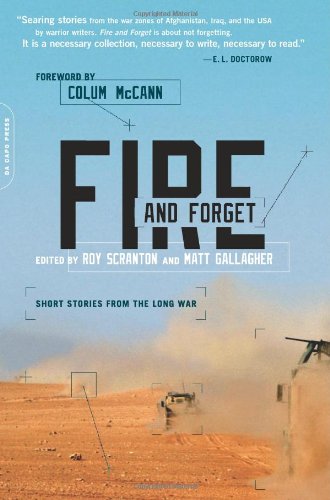
Fire and Forget — a discussion of soldiering, military culture, story telling, and my story in this anthology of military fiction
I dream about the military almost every other night, about Afghanistan more often than Iraq, sometimes about training. The dreams are usually tense, but not disturbing. I think my training prepared me for combat. Amazingly, the most troubling dream involves my returning to Ranger School. A bureaucratic error requires me to go again. It’s recurred more times than I can count.
Ranger School was effective because it was so God-damned hard — a 40% graduation rate when I attended. I’ve never stopped being proud of having earned the Ranger Tab, not when Ron Paul and Chuck Hagel convinced me our foreign policy was misguided, nor when the Constitution convinced me the state threatened my liberty far more than any external enemies. Even after Rothbard and Hoppe and the impossibility of a monopoly on violence, I remained proud.
The warrior ethic has likely been a virtue ever since primordial men banded together to bring down game too difficult or dangerous for lone hunters. Libertarians shouldn’t discard it because of its co-opting by the state.
Perhaps state stewardship of warrior culture makes it a lost cause and its scrutiny a moot point. Fair enough. If so, then chalk this up to sheer sentimentalism: